
Beaver Tail Leather: Texture, Uses, Care, Species Records, and Buying Guide
Beaver Tail leather is genuine tanned mammal hide known for a compact paddle shaped skin with a natural geometric or pebbled surface.
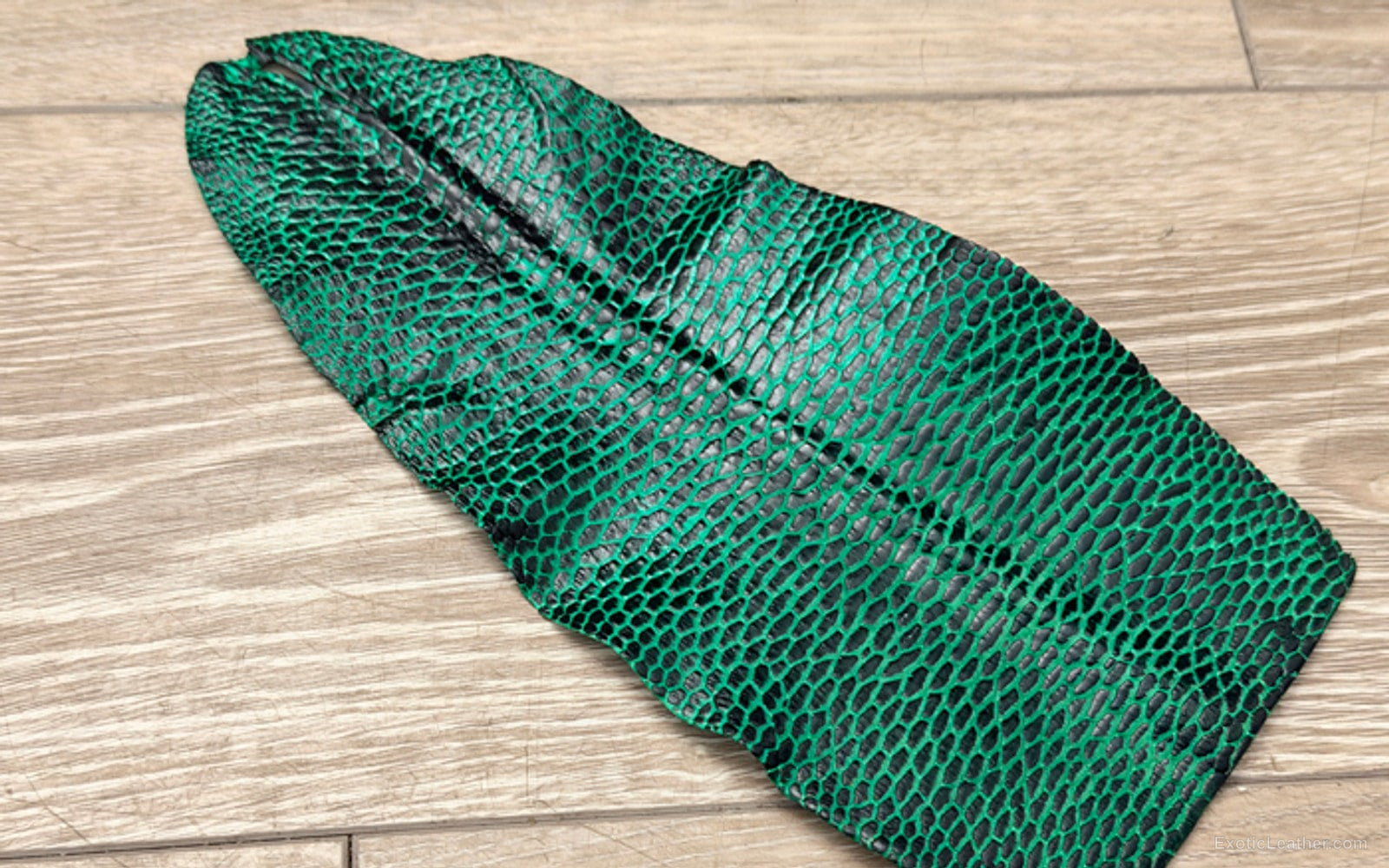
What Is Beaver Tail Leather?
Beaver Tail leather is real leather made by tanning and finishing a beaver tail into Leather.
Its limited size makes pattern nesting and use of every off cut especially important.
What Does Beaver Tail Leather Look and Feel Like?
Beaver tail leather has a compact paddle shape and a tight, geometric texture that becomes finer toward some edges.
Do not identify an exact species from grain alone.
Natural leather varies from piece to piece. Confirm the photographed material, finish, flexibility, and usable area before buying.
Is Beaver Tail Leather Durable?
Beaver tail leather is durable enough for wallets, inlays, and boot accents when the pattern avoids weak edges and high friction corners.
Thickness often changes from the base toward the tip. Skive and reinforce only after checking the exact piece, since one area may be firm while another is noticeably thinner.
Is Beaver Tail Leather Waterproof?
No. Beaver tail leather is not naturally waterproof.
Like other types of leather, it can absorb moisture unless a water resistant or waterproof finish has been applied. Avoid prolonged exposure to water to help protect the leather and its finish.
What Is Beaver Tail Leather Used For?
Beaver tail leather is used for wallet faces, card holders, watch strap overlays, boot panels, inlays, knife sheaths, jewelry, and other small goods.
A single large tail may yield a compact or card wallet exterior, while wider panels may be used for shoes or boots. Save the narrow tip and clean edge pieces for tabs, zipper pulls, or inlays.
How Do You Care for Beaver Tail Leather?
Wipe beaver tail leather gently, keep it dry and flat, and test a small amount of finish compatible conditioner only when the surface needs it.
Do not use household cleaners or soak the leather.
Can Beaver Tail Leather Be Shipped Everywhere?
Beaver tail leather can be shipped to many U.S. destinations, but eligibility should be checked against the documented beaver species and the receiving state's wildlife rules.
A tanned tail is a wildlife product even when it is sold for leathercraft.
What Should You Check Before Buying Beaver Tail Leather?
Check the documented species, maximum length and width, usable center, thickness changes, texture, finish, scars, holes, grade, and whether one tail fits your pattern.
When buying Beaver Tail Leather, compare the actual outline and usable cutting area with the complete project pattern.
How Much Usable Area Does a Beaver Tail Provide?
A beaver tail provides a compact, irregular cutting area, so usable yield depends on the clean center, thickness, edge condition, and project shape.
Wallet panels, watch straps, inlays, tabs, and small accents should be nested on the actual outline before the skin is trimmed.
Should Beaver Tail Leather Be Skived Before Making Small Leather Goods?
Beaver Tail Leather should be skived only when the project requires less bulk and the remaining leather will still support the seam, fold, or edge.
Work from the flesh side of a beaver tail leather off cut and consider backing or edge design before removing material that cannot be replaced.
About This Guide
Our guides draw on more than 16 years of direct exotic-leather industry experience and a multigenerational family background working with hides. We combine that history with firsthand experience across many leather types and practical lessons learned through hands-on trial and error.
Check Current Availability
Check current beaver tail leather availability.