
Burmese Python Leather: Pattern, Uses, Care, and Buying Guide
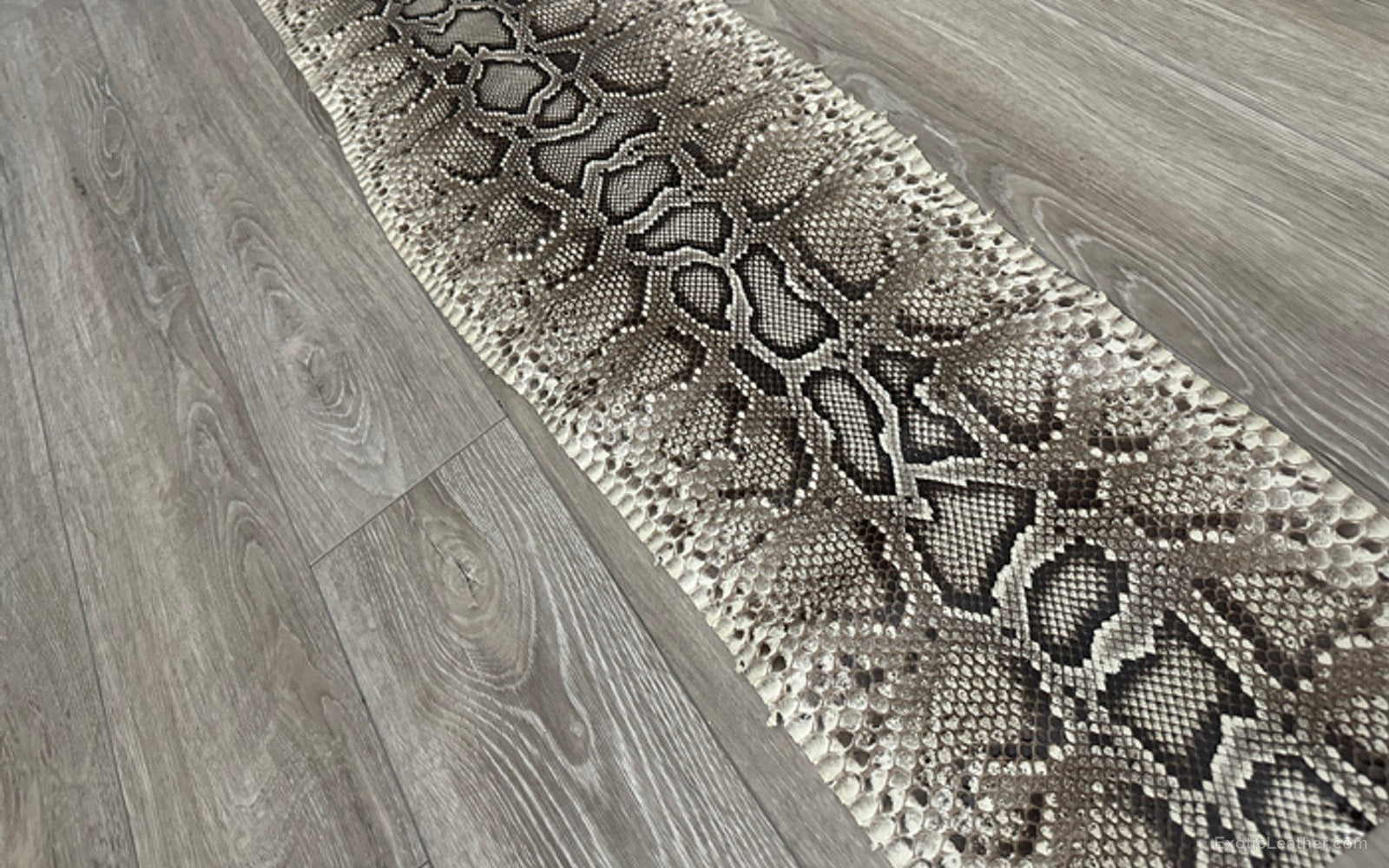
Burmese python leather is genuine leather from Python bivittatus, known for a long body, bold natural blotches, and overlapping directional scales.
Some skins come from established international supply chains, while a smaller portion may come from invasive python removal in Florida.
What Is Burmese Python Leather?
Burmese python leather is tanned skin from Python bivittatus.
Some older references treat it as a subspecies of the Indian python and use Python molurus bivittatus. Use the scientific name on the supplier paperwork when researching a specific skin.
How Is Burmese Python Different From Reticulated Python?
Burmese python usually has broader, more separated blotches, while reticulated python has a finer network of diamond like pattern and is often more narrowly proportioned.
Either species can vary widely in size. A cropped or dyed panel may hide the pattern clues, so seller identification remains important.
Is Florida Burmese Python Used for Leather?
Yes, some Burmese pythons removed from South Florida are processed into leather, but not every Burmese python skin on the market comes from Florida.
USGS and federal invasive species sources document the established population in South Florida.
What Is Burmese Python Leather Used For?
Burmese python leather is used for boots, shoes, handbags, wallets, belts, watch straps, apparel, jewelry, inlays, and accessories.
Bold dorsal sections make strong center panels. Side areas and offcuts can be used for smaller goods, helping reduce waste.
Is Burmese Python Leather Durable?
It can be durable in a well built product, but a thin skin needs reinforcement and protection from abrasion, dryness, and sharp folds.
Do not judge lifespan from the species name alone. Tanning, finish, condition, backing, and construction are equally important.
How Do You Clean Burmese Python Leather?
Handle and wipe in the scale direction, keep the surface away from rough friction, and use only a compatible exotic or reptile leather conditioner when the leather actually needs it.
For routine care, gently wipe the leather with a soft, dry cloth. For minor spots or surface dirt, use a slightly damp cloth with clean water, wiping in the direction of the scales. If additional cleaning is necessary, use a small amount of cleaner specifically formulated for exotic reptile leather. Test it on an inconspicuous area first, and avoid soaking the leather. Allow it to air dry naturally, away from direct sunlight or heat.
Visible scale edges are part of the material. Excessive moisture, heat, harsh cleaning products, or aggressive rubbing can change the finish and cause harm to the leather surface.
Does Burmese Python Leather Need Backing?
Most Burmese python used for wallets, straps, belts, bags, and footwear should be backed or laminated to a supporting layer.
The support controls stretch and gives stitches a stable base. Test adhesive on an offcut because some finishes can darken or mark.
What Should You Check Before Buying Burmese Python?
Check species, length, width, usable center, scale condition, finish, grade, photos, and destination restrictions.
If Florida origin matters to the purchase, ask the seller for Burmese python from Florida. Do not assume invasive origin from the name.
How Do Finish and Scale Condition Affect Burmese Python Yield?
Usable yield depends on more than length and width because lifted, curled, abraded, or heavily finished scale areas may not suit prominent folds or panels.
Place the project pattern over the actual skin and check scale direction, clean width, finish consistency, holes, and backing needs before buying.
Can Burmese Python Leather Be Used on a Curved or Folding Part?
Burmese Python Leather can be used on a curved or folding part when scale direction, backing, thickness, and the bend radius are tested together.
Before cutting burmese python leather, avoid forcing a sharp crease across hard or raised structures and flex a backed offcut around the intended curve.
About This Guide
Our guides draw on more than 16 years of direct exotic-leather industry experience and a multigenerational family background working with hides. We combine that history with firsthand experience across many leather types and practical lessons learned through hands-on trial and error.
Check Current Availability
Check current Burmese python leather availability.
Sources and Further Reading