
Caiman Leather: Uses, Characteristics, Care, and Buying Guide
Caiman leather is genuine crocodilian leather known for a pronounced scale pattern and bony deposits that make parts of the skin firmer than many alligator and other crocodile species bellies.
That structure is a design consideration, not a reason to dismiss the material. Caiman can work very well when the pattern is placed around harder sections.
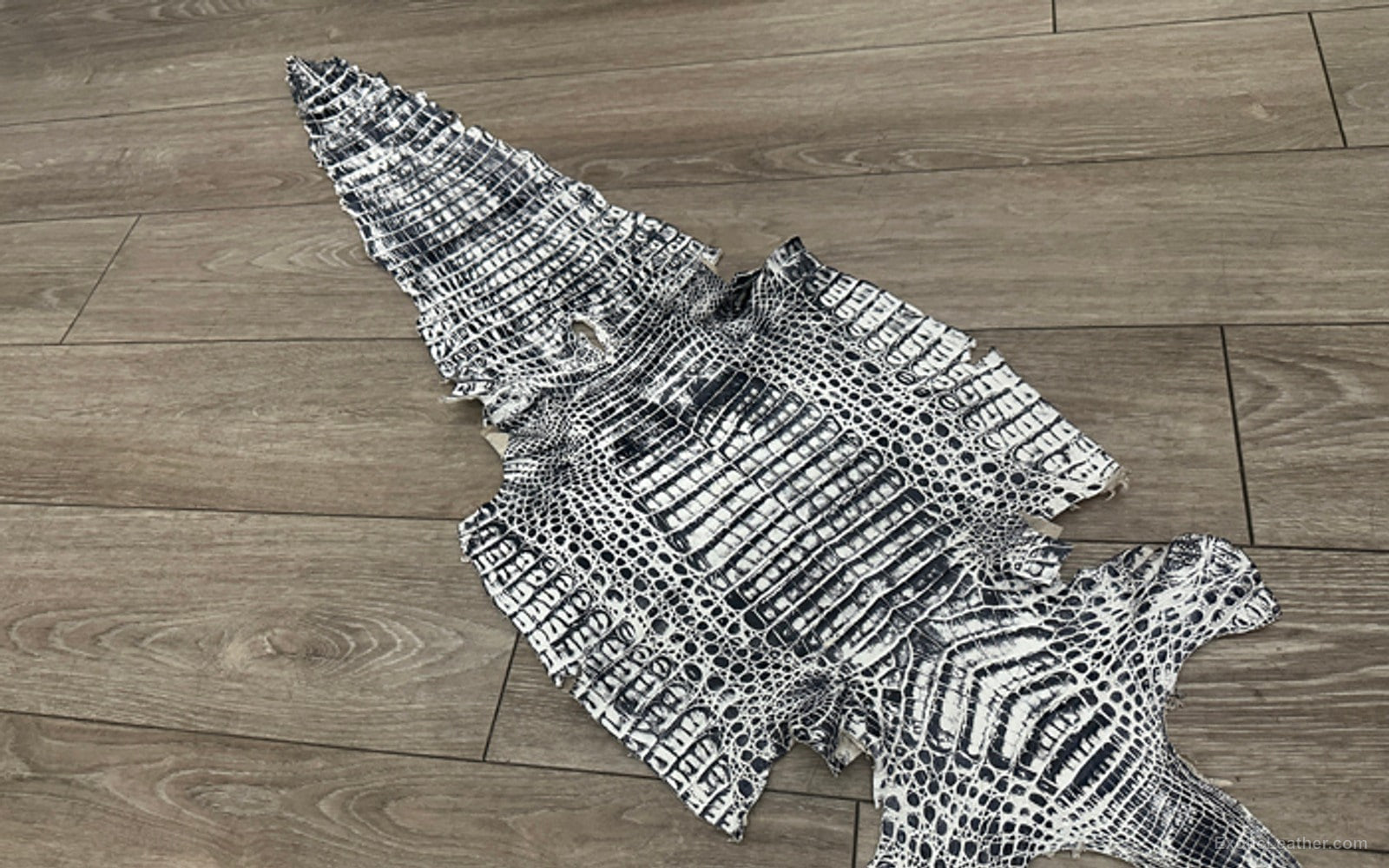
What Is Caiman Leather?
Caiman leather is tanned skin from a caiman species, a member of the order Crocodylia.
Commercial examples include common or brown caiman, Yacare caiman, and broad snouted caiman. Listings should use the supplier’s scientific name when available.
Is Caiman Leather Crocodile Leather?
Caiman is crocodilian leather, but a caiman is not a true crocodile they belong to the family Alligatoridae, making them much more closely related to alligators than to true crocodiles.
Calling every crocodilian “crocodile” may be common casual language, but it is not precise enough for product identification or legal research.
How Is Caiman Different From Alligator and True Crocodile?
Caiman usually has more extensive bony deposits in the skin, which can reduce flexibility and make dye absorption less even.
American alligator and many crocodile bellies are typically smoother and more pliable. Actual tannage, thickness, and finish still matter.
What Are Osteoderms in Caiman Leather?
Osteoderms are bony deposits formed within the skin beneath certain scales.
They can feel hard, resist skiving, interrupt cutting, and create lighter or darker dye areas. They are natural structure, although cracks between plates and poor usable yield affect grade.
Is Caiman Leather Durable or Prone to Cracking?
Caiman can be durable, but hard scales and the hinge lines between osteoderms are less forgiving when repeatedly folded.
Do not crease a thick plate to test it. Place repeated bend lines between suitable scales, use reinforcement, and avoid dried or already cracked areas.
What Is Caiman Leather Used For?
Caiman is used for boots, belts, wallets, bags, footwear panels, knife sheaths, inlays, and other structured goods.
Its bold pattern suits designs that show larger scales. Smaller usable areas can become card holders, watch straps, accents, and compact panels.
Is Caiman Good for Boots, Belts, and Wallets?
Yes, when the hide is matched to the construction and hard areas are placed deliberately.
Boot shafts and belt overlays can display bold scales. Wallet fold lines need more care. A watch strap requires a sufficiently flexible area plus lining and reinforcement.
How Should Buyers Choose a Caiman Hide?
Review photos or grade for center holes, dye variation, existing cracks, stiff plates, cut shape, and usable area.
Choose by the pattern pieces you need. A lower grade large hide may still yield excellent small panels, while a visually clean hide may be too rigid for a repeated bend.
How Do You Care for Caiman Leather?
Keep caiman leather dry, avoid forcing stiff scales into sharp folds, and condition only with a product tested on the actual finish.
A conditioner cannot repair cracks through hard plates. Store the hide supported and inspect hinge lines before using them in a repeated bend.
How Does Scale Size Affect Pattern Placement on Caiman Leather?
Scale size changes how caiman leather looks on narrow straps, wallet panels, footwear, and larger bag sections.
Place the complete caiman leather pattern before cutting so paired components balance visually and important scale transitions do not land on a fold or seam.
About This Guide
Our guides draw on more than 16 years of direct exotic leather industry experience and a multigenerational family background working with hides. We combine that history with firsthand experience across many leather types and practical lessons learned through hands on trial and error.
Check Current Availability
Check current caiman leather availability.