
Can Exotic Leather Get Wet? What to Do After Rain, Spills, or Soaking
Exotic leather can survive limited moisture, but it should not be treated as waterproof unless the finished product was specifically designed and tested for water exposure.
If it gets wet, blot the surface, maintain the shape, and let it dry slowly away from heat.
Is Exotic Leather Waterproof?
No broad exotic leather category is automatically waterproof, and surface water resistance does not guarantee the backing, dye, adhesive, lining, or seams are protected.
Ask about the finished product, not only the species.
Before treating a larger area, test the care method on a hidden spot or matching off cut and let it dry completely.
What Should You Do Immediately When Exotic Leather Gets Wet?
Blot excess moisture with a clean absorbent material, avoid rubbing scales, remove wet contents, and support the item in its normal shape.
Do not wring, stretch, or sharply bend wet leather.
How Should Wet Exotic Leather Be Dried?
Dry it slowly, naturally in a ventilated room away from direct sunlight, hair dryers, radiators, ovens, and other concentrated heat.
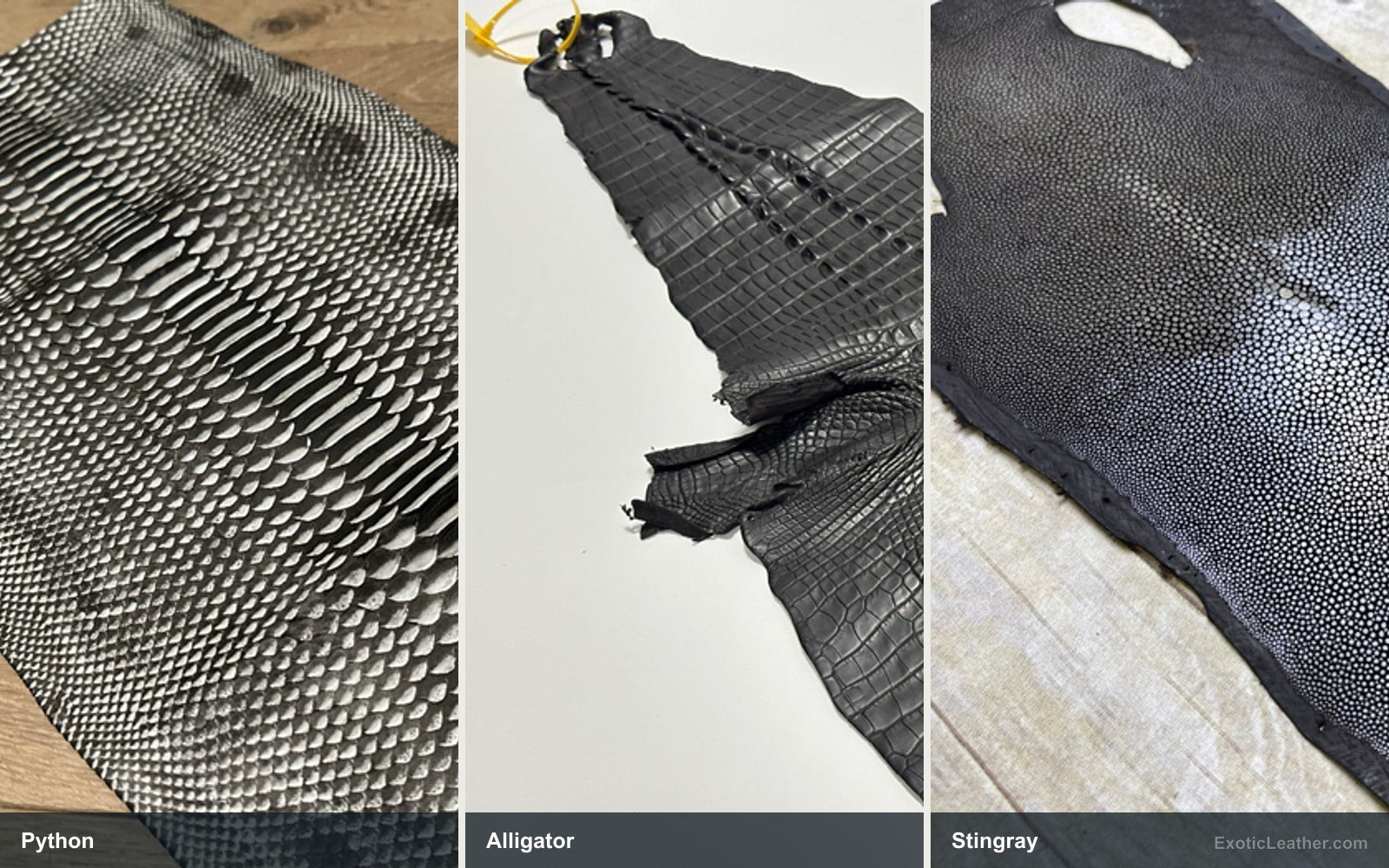
Do Python, Crocodilian, Ostrich, Stingray, and Fish Leather React Differently?
Yes. Thin scaled skins can distort, absorbent ostrich can spot, stingray's hard surface may hide vulnerable backing and bubble, fish leather behavior varies by species and finish.
The tannage and finish can matter as much as the animal structure.
Will Water Leave a Permanent Stain?
It can cause tide lines, darkening, dye movement, finish bloom, stiffness, or texture change, but the result cannot be predicted before drying.
Do not apply more water broadly to “even out” a stain without expert guidance.
Should Wet Exotic Leather Be Conditioned Right Away?
No. Let it dry and stabilize first, then assess whether a compatible conditioner is needed.
Applying product to damp leather can trap moisture, move color, or over soften the structure.
Can Leather Conditioner Fix Water Damage?
Conditioner may improve dryness after the leather is fully dry, but it cannot reliably remove water stains, reverse shrinkage, restore a damaged finish, or repair delamination.
Using more product is not a repair strategy. First identify what changed: dryness, a tide line, color loss, scale curling, a stiff backing, or failed adhesive. Test a finish compatible conditioner only when dryness is the actual problem. Valuable goods and widespread damage are better evaluated by a specialist before treatment.
What Should You Do About Rain, Salt, or Dirty Water?
Blot promptly and seek finish specific advice because dissolved salts and contaminants can remain after the water evaporates.
Road salt, seawater, floodwater, and sugary drinks can affect leather differently depending on its finish. Gently wipe the affected area with a damp cloth, following the direction of the grain or scales. Avoid soaking or saturating the leather. If any residue remains, gently wipe the area again with a clean, slightly damp cloth. For sticky sugary residue, repeat with a fresh, lightly dampened cloth rather than rubbing or scraping. Do not use harsh cleaners. If the stickiness persists, use a cleaner specifically approved for exotic leather and its finish, testing it on a small, inconspicuous area first. Allow the leather to slowly air dry naturally, away from direct heat or sunlight.
When Does Wet Exotic Leather Need Professional Help?
Seek help after soaking, flood exposure, mold, strong odor, widespread dye movement, shrinking, hardening, delamination, severe curling, or damage to a valuable item.
Photograph the wet event and products used before treatment.
Professional help is sensible when the leather dries stiff, loses color, develops tide marks, separates from its backing, or shows lifted scales or finish damage.
Do not keep adding conditioner to hide the problem because excess product can complicate cleaning and repair.
About This Guide
Our guides draw on more than 16 years of direct exotic leather industry experience and a multigenerational family background working with hides. We combine that history with firsthand experience across many leather types and practical lessons learned through hands on trial and error.