Carp Leather: Pattern, Uses, Care, and Buying Guide
Carp leather is genuine fish skin that has been tanned and finished, leaving a natural scale-pocket pattern rather than a printed imitation.
For Carp Leather, skin size, pattern, thickness, flexibility, and finish vary, so the actual item or stock range should be matched to the project.
What Is Carp Leather?
Carp leather is real leather made by tanning and finishing carp skin for use in leather goods.
For Carp Leather, keep the supplier species identification with the inventory because common names can cover more than one species.
Does Carp Leather Smell Like Fish?
Properly tanned and stored carp leather should not smell like raw or spoiled fish.
For Carp Leather, a strong bad odor suggests a storage or condition issue rather than authenticity.
What Does Carp Leather Look Like?
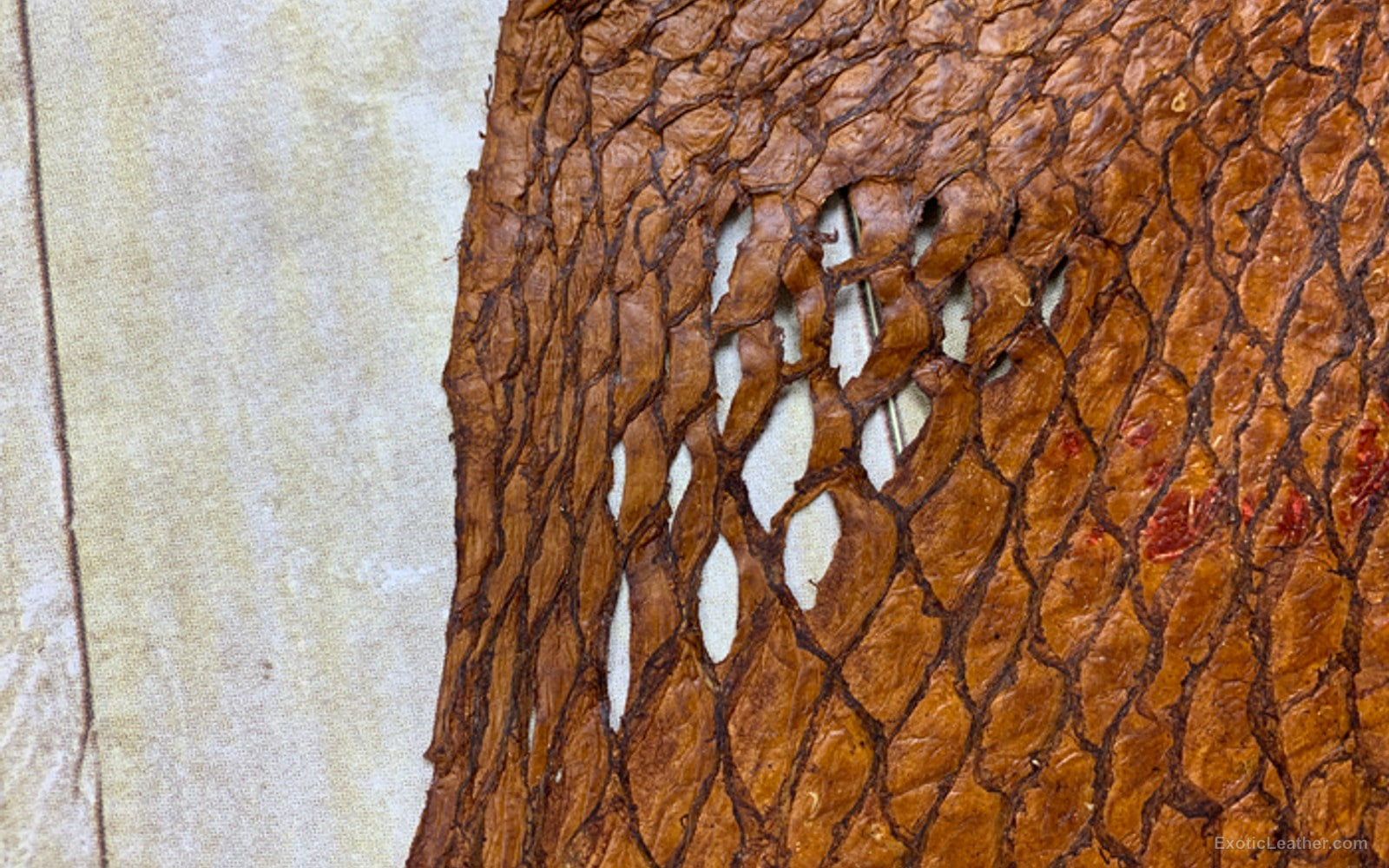
Carp leather shows a repeating scale-pocket pattern whose size changes across the fish.
For Carp Leather, pattern size and color change across the skin and with tannery finishing.
Natural leather varies from piece to piece. Confirm the photographed material, finish, flexibility, and usable area before buying.
Is Carp Leather Good for Wallets?
Carp leather works well on wallets as a backed exterior or accent when the selected skin has enough clean width for the panel.
Inspect the belly and fin areas for thinning, and keep torn scale-pocket edges away from folds or stitch lines.
Can Carp Leather Get Wet?
Carp leather should be kept dry because water can spot the finish, raise weakened scale-pocket edges, or disturb a backing and adhesive.
Water can affect finish, backing, adhesive, lining, and shape.
What Can You Make From One Carp Skin?
One carp skin may yield a card holder, accent, watch strap, jewelry pieces, inlays, or a narrow footwear panel depending on its clean width.
The repeating scale pockets read well on compact panels. Save clean narrow pieces for tassels, zipper pulls, jewelry, watch straps, or matching inlays.
Does Carp Leather Need Backing?
Carp leather benefits from backing when used for wallets, straps, or footwear because the base supports thin scale-pocket edges and stitch holes.
Use a lighter backing for jewelry or inlays and a firmer base for a wallet exterior. Test bonding on a belly or fin area off-cut first.
How Is Carp Leather Measured?
Carp leather is usually described by its greatest length and width, but the usable cutting area is the clean skin inside its natural edges and fin openings.
Lay a paper pattern over the complete photo and keep folds or stitch lines away from visibly weakened scale pockets.
How Do We Inspect Carp Leather Before Cutting?
We inspect carp leather by checking the scale-pocket rows, widest clean panel, thin belly or edge areas, holes, finish consistency, and the direction the pattern should run.
Because the skin is compact, usable dimensions matter more than the outer outline. We place the project template over the clean center first, then reserve narrow sections for tabs, inlays, card-pocket accents, or jewelry.
- Check whether scale pocket edges are secure enough for the intended bend.
- Plan backing before punching stitch holes in thin areas.
- Compare the actual skin with the required panel, not with a rectangular length by width estimate.
Can Carp Leather Be Cut and Stitched With Standard Leatherworking Tools?
Carp Leather can usually be cut and stitched with sharp leatherworking tools when the skin is stabilized and the method suits its thickness and finish.
Back a carp leather test piece first and check whether scale pockets, grain direction, or surface texture lift or distort around the stitch line.
About This Guide
Our guides draw on more than 16 years of direct exotic-leather industry experience and a multigenerational family background working with hides. We combine that history with firsthand experience across many leather types and practical lessons learned through hands-on trial and error.
Check Current Availability
Check current carp leather availability.