How to Tell if Exotic Leather Is Genuine: Real vs Embossed Leather
The most reliable way to identify genuine exotic leather is to combine species specific structure with the full hide shape, natural pattern changes, product description, and seller records.
No single bend, smell, scratch, or burn test can identify every leather, and destructive tests can ruin valuable material.
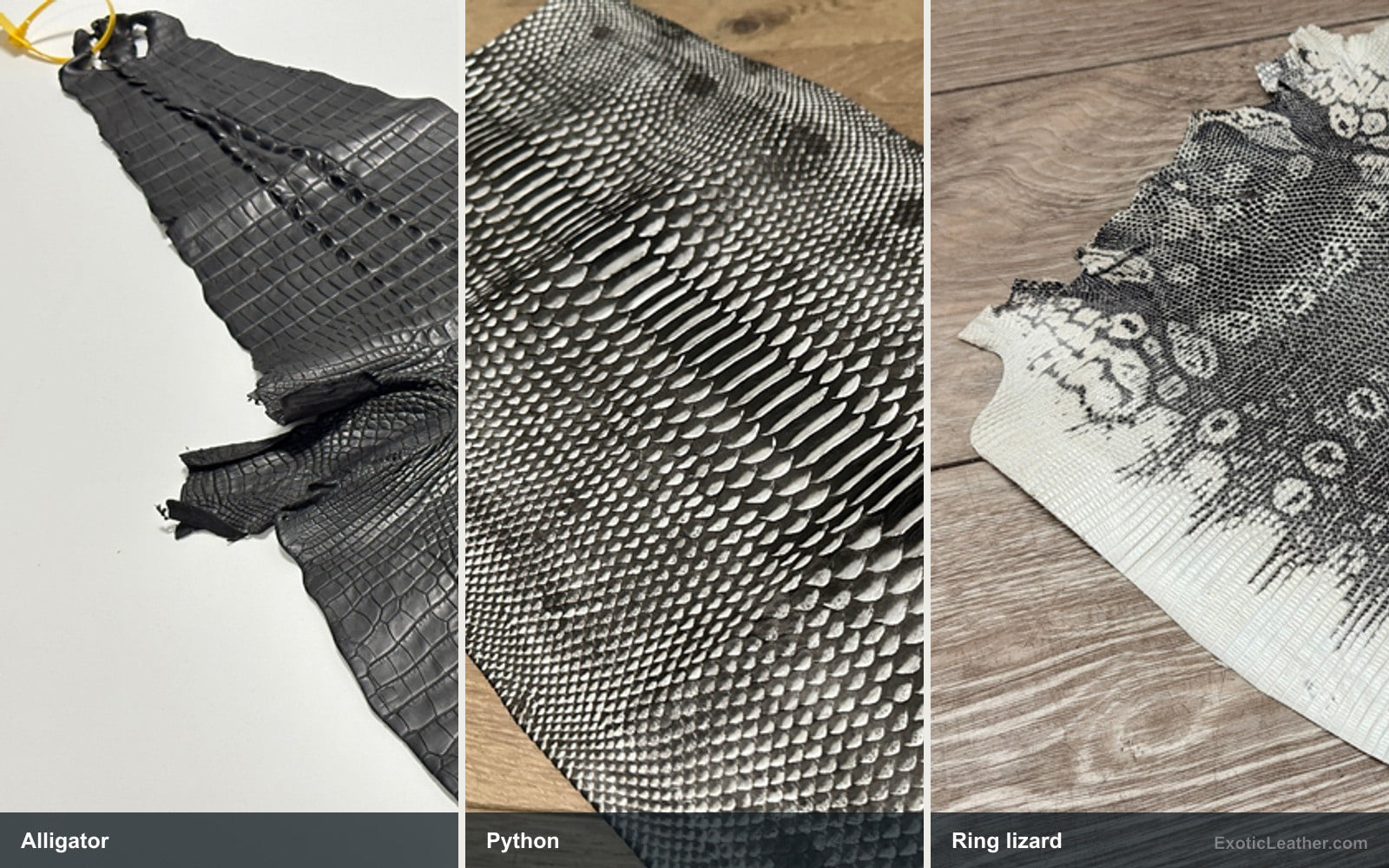
What Is Genuine Exotic Leather?
Genuine exotic leather is tanned skin from the animal species named in the product description.
| Material | What it actually is | What the listing should say |
|---|---|---|
| Genuine species leather | Tanned skin from the named animal | The common species name and scientific name when exact identification matters |
| Embossed leather | Real leather, often cowhide, pressed with an exotic pattern | The base leather and that the pattern is embossed |
| Synthetic imitation | A non leather sheet or composite made to resemble exotic leather | Synthetic, faux, vegan, polyurethane, or another accurate material description |
Genuine python comes from a python, genuine alligator comes from an alligator, and genuine stingray comes from a stingray. The finish may be matte, glazed, metallic, nubuck, painted, or printed without changing the underlying species.
What Is Embossed Leather?
Embossed leather is leather pressed with a patterned plate or roller to reproduce a texture such as crocodile, python, ostrich, or stingray.
The base is often cow hide, lamb leather, or another common leather. Embossing can be shallow and obviously repeated or detailed enough to look convincing in a small product photo.
Is Embossed Leather Real Leather?
Embossed cowhide is real cow leather, but it is not genuine leather from the exotic species it imitates.
A clear listing should name both facts, for example “cowhide embossed with a crocodile pattern.” “Genuine leather” by itself describes the material category but does not prove the advertised species.
How Can You Tell if Exotic Leather Is Genuine?
Examine the pattern transitions, texture, hide shape, reverse side, construction, and seller information together.
- View a large area: natural scales usually change size and shape across the animal.
- Follow the pattern: look for believable transitions between belly, flank, back, neck, or tail.
- Check the outline: a complete skin has a species-specific shape that an embossed panel does not.
- Inspect the reverse: backing, lamination, and edge construction can reveal the base material, although a lining may hide it.
- Read the description: the seller should state the species or say that the pattern is embossed.
- Compare records: tags, invoices, and scientific names can support identification when applicable.
Does Genuine Exotic Leather Have a Repeating Pattern?
Natural exotic leather does not repeat with the mechanical regularity of an embossing plate, but repetition alone is not a conclusive test.
Some natural scales are orderly, and modern embossing can include deliberate variation. Look for an identical group of scales, scars, or valleys repeating at regular intervals rather than expecting every genuine hide to look random.
Are Scars and Irregular Scales Proof That Leather Is Genuine?
No. Natural scars and irregular scales support a natural hide interpretation, but they do not prove the species by themselves.
Embossed leather can be applied over real cowhide with scars or grain variation. Printed and molded materials can also imitate imperfections. On genuine leather, a scar should interact naturally with the surrounding scale or grain structure.
Which Species Specific Details Can Help?
Useful clues differ by species and should be treated as supporting evidence.
- Crocodile: many skins show integumentary sensory organ pores on scales.
- American alligator: the belly generally lacks the same pore pattern seen on many crocodiles.
- Caiman: bony deposits can make parts of the skin firmer and affect dye absorption.
- Python: scale size and arrangement change across the width and length of the skin.
- Stingray: the dense bead structure and central pearl area are difficult to duplicate throughout the material.
- Ostrich: genuine quill follicles vary in spacing and prominence across the hide.
Paint, glazing, sanding, and heavy finishes can obscure these details.
Can High Quality Embossed Leather Look Real?
Yes. High quality embossing can reproduce scale depth, irregularity, color shading, and surface feel well enough to fool a close up inspection.
That does not make it inferior for every project. Embossed cowhide can offer a larger, more uniform cutting area and lower cost. The problem is mislabeling, not the existence of embossed leather.
What Should You Ask Before Buying Exotic Leather?
Ask the seller to identify the material plainly and explain whether the photograph shows the exact item or a representative stock item.
- What is the common and scientific species name?
- Is it genuine species leather or an embossed pattern?
- Is the photograph the exact hide or a stock example?
- What finish and backing are present?
- Where are the central flaws, scars, or holes?
- What grade or size range is being offered?
Can a Small Exotic Leather Piece Always Be Identified With Certainty?
No, a small piece may not show enough scale progression, pores, follicles, edges, or reverse side structure to confirm the species from appearance alone.
Use the seller description, scientific name, records, full-hide photographs, and physical features together instead of trusting one visual test.
About This Guide
Our guides draw on more than 16 years of direct exotic-leather industry experience and a multigenerational family background working with hides. We combine that history with firsthand experience across many leather types and practical lessons learned through hands-on trial and error.
Check Current Availability
Species collections are more reliable than links to individual one of a kind products, which leave the site after they sell.
Use species collections to compare complete shapes, natural pattern transitions, reverse sides, and honest product descriptions.
Check current alligator leather availability.
Check current python leather availability.
Check current stingray leather availability.