Reticulated vs Burmese vs Short-Tailed Python Leather: Which Skin Fits Your Project?
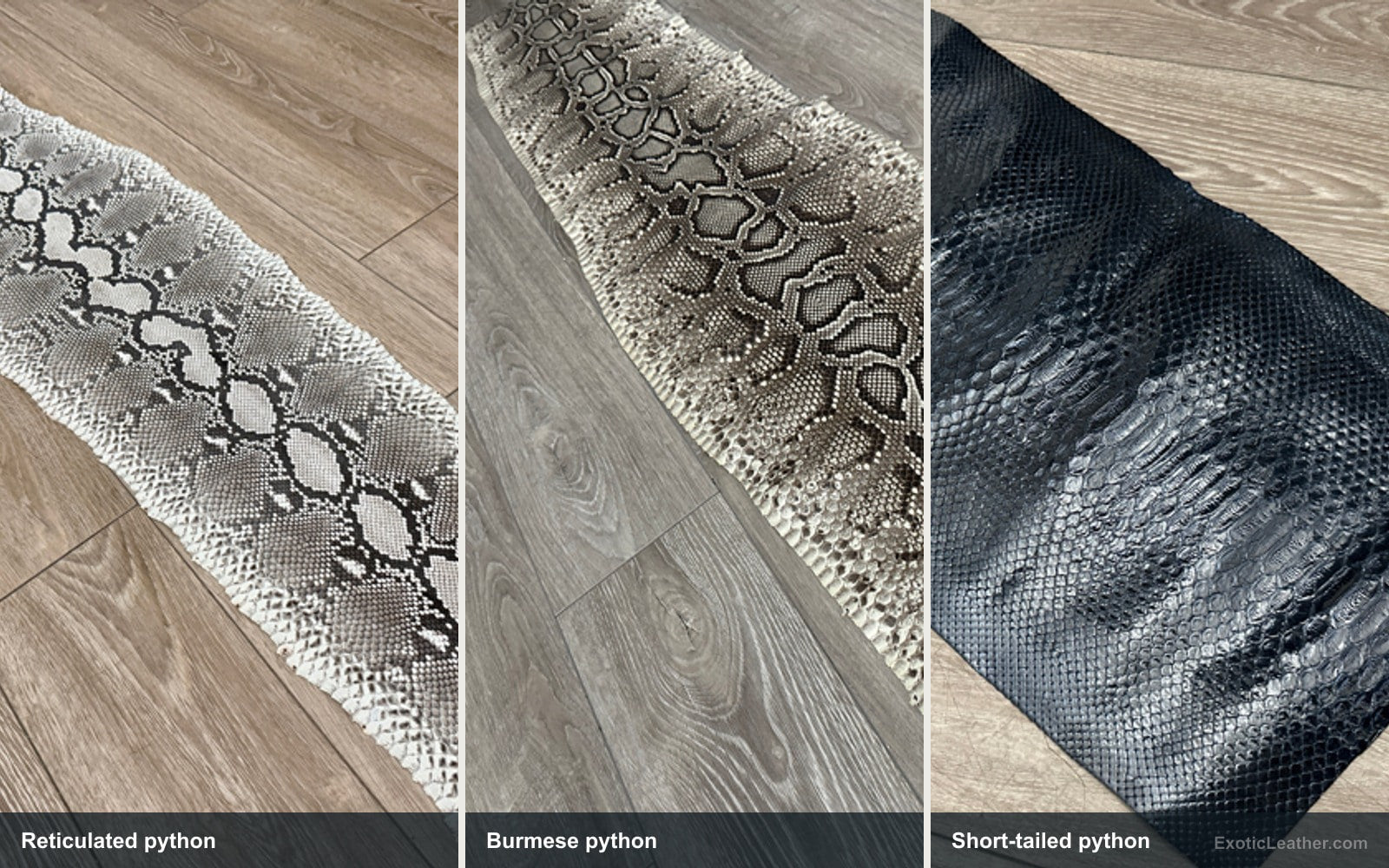
Reticulated, Burmese, and short-tailed python leather differ most in body proportions and natural pattern: reticulated is often long and narrow, Burmese is long with broad blotches, and short-tailed python is wider and more compact.
No type is automatically better. The best skin is the one that gives enough clean pattern area for the project.
What Is the Difference Between Reticulated, Burmese, and Short-Tailed Python Leather?
Reticulated python usually has the longest narrow shape with a diamond shaped pattern, Burmese python combines length with broad blotches, and short-tailed python provides a wider compact cutting area.
These are common tendencies, not guaranteed dimensions. Compare the actual skins and supplier species records.
| Decision | Reticulated python | Burmese python | Short-tailed python |
|---|---|---|---|
| Typical shape | Very long and comparatively narrow | Long with useful body width | Wide and compact |
| Natural pattern | Fine network pattern | Large separated blotches | Bold pattern across a broad body |
| Best pattern fit | Long boots, belts, and narrow panels | Boots, bags, and mixed long panels | Wallets, footwear vamps, and wider small goods |
Which Python Skin Is Longest or Widest?
Reticulated python is commonly the longest and narrowest, while short-tailed python is commonly the widest and most compact.
Burmese python generally falls between those shapes. Animal size, trimming, tanning, and stretching can affect any individual skin.
How Do Their Natural Patterns Differ?
Reticulated python has a fine network-like design, Burmese python has large separated blotches, and short-tailed python has bold species-dependent markings across a wider body.
Dye and finish can mute or completely cover the natural colors while the scale layout remains visible.
Which Python Is Best for Boots, Bags, Wallets, Belts, and Watch Straps?
Reticulated and Burmese skins suit long panels, while short-tailed skins can yield wider wallet, footwear, and bag pieces.
That doesn’t necessarily mean you can’t use one instead of the other. They’re interchangeable as long as the size meets your needs.
- Boots and belts: long reticulated or Burmese sections.
- Wallets and bags: wide short-tailed panels or sufficiently wide sections of any skin.
- Watch straps: any type with suitable small-scale pattern and backing.
Which Python Gives the Best Pattern Yield?
The best yield comes from the skin whose clean shape matches the paper pattern, not from one species in every situation.
A long skin can waste material on a wide panel, while a wide skin can be inefficient for a continuous narrow belt. Mark flaws and scale direction on a tracing before cutting.
Do the Three Types Need Different Backing or Cutting Methods?
All three can use support, but the backing and cut plan should respond to skin thickness, finish, scale size, and the product rather than species alone.
Test adhesive, stitch length, skiving, and edge treatment on an offcut. Keep repeated folds aligned with a flexible area.
How Do Matte, Glazed, Metallic, Dyed and Painted Finishes Change the Choice?
Finish can change flexibility, scale feel, color transfer risk, scratch visibility, and which cleaners or conditioners are safe.
A heavily glazed skin may feel firmer than a matte skin of the same species. Compare finish and condition before relying on a species stereotype.
What Should You Compare Before Buying?
Compare the exact scientific species, straight length, widest useful area, center pattern, grade, flaws, finish, scale condition, backing needs, and destination eligibility.
For pairs or production, ask whether skins can be matched by color shade, width, scale size, and finish. Confirm whether photos show exact WYSIWYG items or a representative range.
Which Python Type Is Easiest for a Beginner to Lay Out?
The easiest skin is the one whose clean width, pattern scale, finish, and shape fit the intended project with the least joining or forced placement.
Reticulated and Burmese skins offer length, while short-tailed python can provide broader compact panels, so the pattern should decide the choice.
Which Python Type Gives the Widest Small-Goods Panels?
Short-tailed python is often broader relative to its length, but the widest usable panel depends on the individual skin, trim, grade, and pattern placement.
Use actual width measurements at the intended cutting location rather than a species label alone.
About This Guide
Our guides draw on more than 16 years of direct exotic-leather industry experience and a multigenerational family background working with hides. We combine that history with firsthand experience across many leather types and practical lessons learned through hands-on trial and error.
Check Current Availability
Check current python leather availability.