Toad Leather: Texture, Uses, Care, and Buying Guide
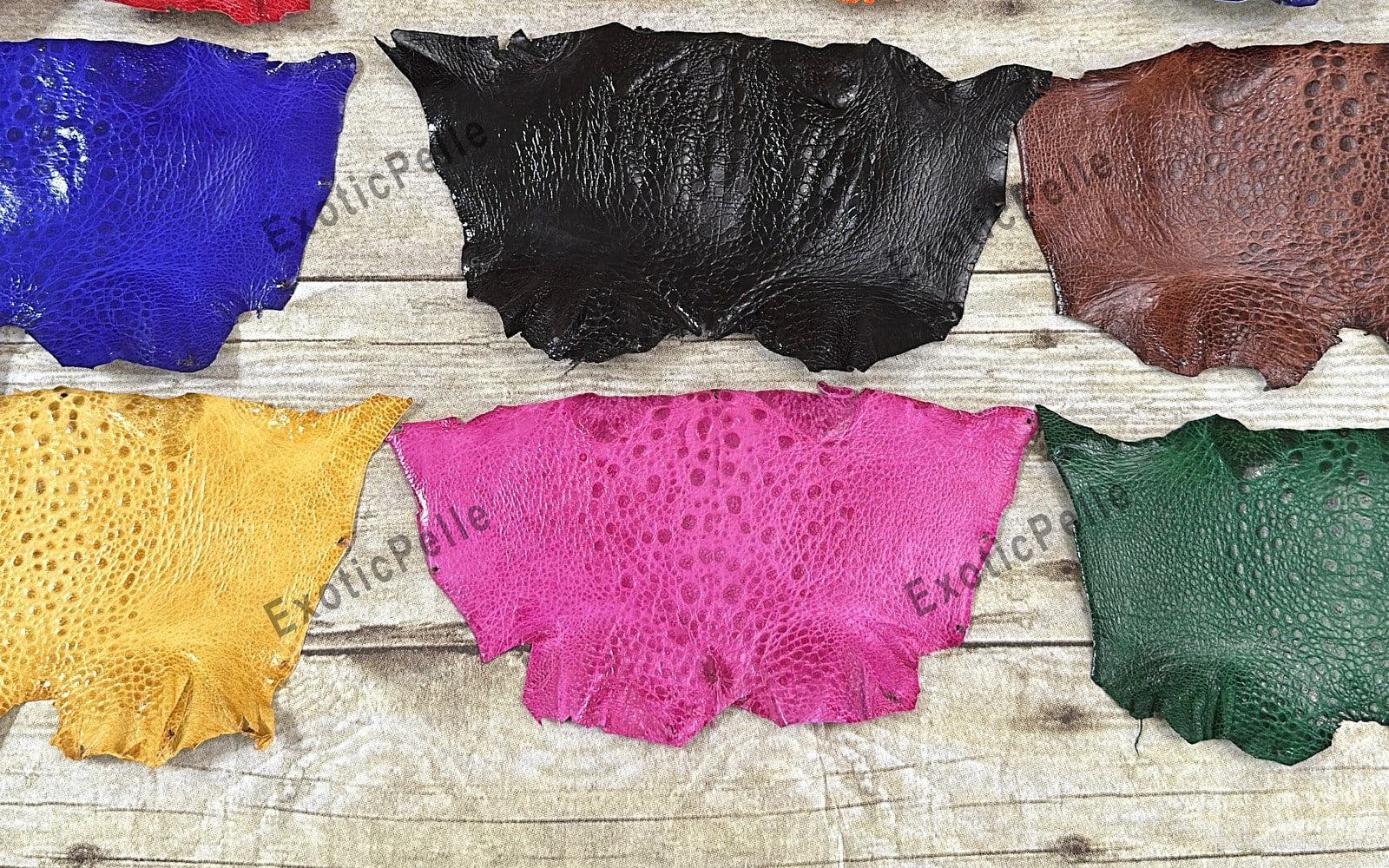
Toad leather is genuine amphibian leather made from a small skin with an unmistakably raised, pebbled surface.
In the trade, cane toad usually refers to Rhinella marina. Check the supplier's scientific identification because a trade name alone is not enough to confirm a species.
What Is Toad Leather?
Toad leather is real leather made by tanning and finishing toad skin.
It is not embossed cowhide or synthetic material when accurately labeled as genuine Toad leather.
How Large Is a Toad Skin?
A finished toad skin is small and irregular.
Place a paper template over the full skin photo before buying. A compact skin may fit a card pocket accent or key fob but not a full wallet exterior.
Why Is Toad Leather So Bumpy?
The raised, warty texture comes from the toad's natural skin and remains visible after tanning.
Dye and gloss can change color and shine while the natural relief remains visible.
Natural leather varies from piece to piece. Confirm the photographed material, finish, flexibility, and usable area before buying.
Can Toad Leather Be Flattened?
Toad leather can be backed and pressed into a project, but heavy pressure can crush the raised texture that makes it distinctive.
Support it from the reverse and use a protected inlay or overlay. It should not be expected to carry the project's structure by itself.
What Can You Make With Toad Leather?
Toad leather is best suited to small pieces such as wallet accents, coin purses, watch strap overlays, keychains, jewelry, inlays, and lighter wraps.
Its size encourages efficient cutting. Even a section with edge damage may still yield a zipper pull, small inlay, tassel detail, or key fob face.
Does Toad Leather Need Backing?
Toad leather usually needs a thin backing because the small skin is often used as a textured face rather than a load bearing layer.
Choose a base that will not flatten the raised texture. Test the adhesive near an unusable edge, then press from the reverse instead of crushing the bumps from above.
How Do You Care for Toad Leather?
Keep toad leather dry, remove dust from the raised texture with a soft brush, and use very little tested conditioner only when the finish needs it.
Do not scrub across the bumps or soak a lined piece. Let brief moisture dry naturally away from direct heat.
How Do You Choose a Toad Skin?
Choose a toad skin by the scientific name, usable central texture, largest dimensions, flexibility, finish, holes, and the size of your pattern.
Check whether the listing shows the exact skin or a stock range, then compare the clean center with the item you plan to make.
How Should Toad Bumps Be Positioned in a Project?
Place the most recognizable raised texture where it remains visible after trimming, folding, stitching, and edge finishing.
Avoid forcing thick bumps into tight folds or narrow seam allowances, and use backing to support thinner surrounding skin without flattening the natural surface.
Should Toad Leather Be Skived Before Making Small Leather Goods?
Toad Leather should be skived only when the project requires less bulk and the remaining leather will still support the seam, fold, or edge.
Work from the flesh side of a toad leather off cut and consider backing or edge design before removing material that cannot be replaced.
About This Guide
Our guides draw on more than 16 years of direct exotic leather industry experience and a multigenerational family background working with hides. We combine that history with firsthand experience across many leather types and practical lessons learned through hands on trial and error.